
GTC Taipei 2026: The AI Race Just Went Physical. Where Will the Philippines Play?

Diwa “Wawi” del Mundo
Founder & CEO · Apper Cloud Labs
I spent the last few days going through the talks at NVIDIA GTC Taipei 2026, and one thing became very clear to me.
The AI conversation has changed.
For the past two years, AI meant chatbots and software, things on a screen. But the talks in Taipei this year were about something else. They were about power, factories, and hospitals. Real, physical things. The message across almost every session was the same: AI is leaving the cloud and entering the physical world. And that shift needs a kind of infrastructure most of us are not thinking about yet.
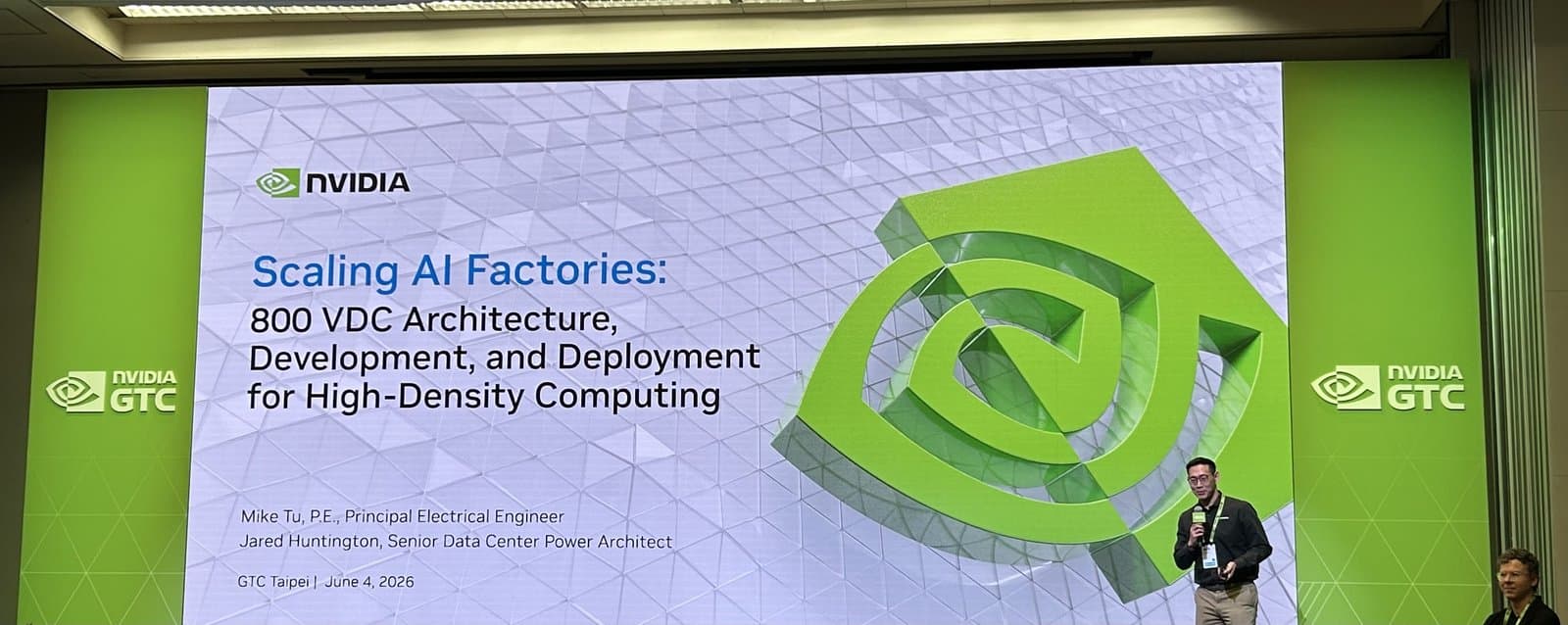
Let me walk you through three talks that stayed with me, and what I believe they mean for us here in the Philippines.
1. The “boring” talk that matters most: 800 VDC power
The session that surprised me was not about a new model. It was about electricity.
NVIDIA is changing how power enters the server rack, moving from 54 volts to 800 volts of DC power. The reason is simple physics. Higher voltage means lower current, and lower current lets you push much more power through the same copper. Around 150% more, in fact. It also removes the need for those heavy copper busbars, about 200 kilos each, that data centers use today. This is not a new invention. The EV and solar industries already made this same jump.
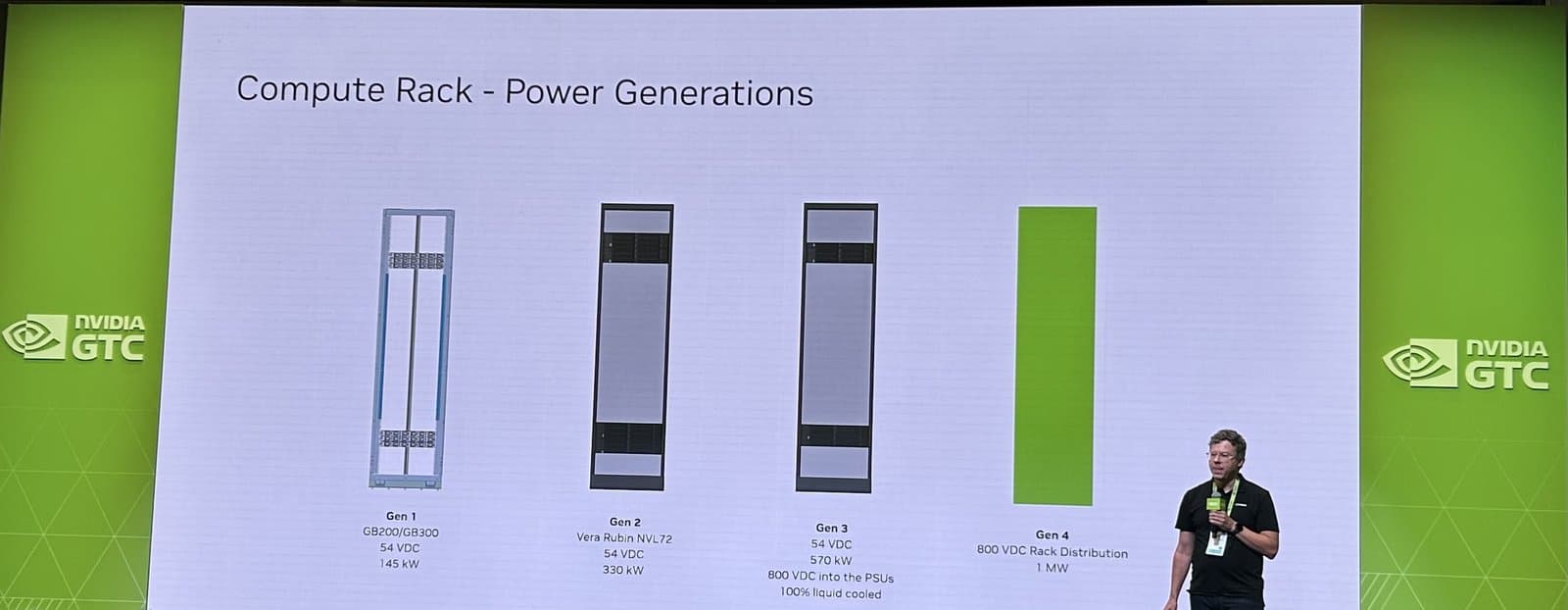
Why does this matter? Because power demand is exploding. A rack today uses around 150 to 200 kVA. NVIDIA’s roadmap points toward 1 megawatt per rack in the early 2030s. That is roughly a 7x jump in just a few generations:
| Generation | Voltage | Power | Cooling |
|---|---|---|---|
| Gen 1 (GB200/GB300) | 54 VDC | 145 kW | Air or liquid |
| Gen 2 (Vera Rubin NVL72) | 54 VDC | 330 kW | Liquid preferred |
| Gen 3 | 800 VDC into PSUs | 570 kW | 100% liquid |
| Gen 4 | Full 800 VDC rack | 1 MW | 100% liquid |
Two things stood out to me. First, the change is gradual. NVIDIA is easing the ecosystem in, not forcing one giant leap. Second, by Gen 3, liquid cooling is no longer optional. There is no air-cooled version at these power levels.
Honest takeaway
2. Healthcare: the money is in integration, not the models
The second talk that struck me was on healthcare. NVIDIA is pushing two kinds of AI into the hospital at once: agentic AI (software agents like a Radiology Agent or Nurse Agent) and physical AI (robots for service and surgery). They call the end goal the “Agent-First Hospital.”
Taiwan was the showcase here. There is a US$2.15 billion “Healthy Taiwan” push to build a sovereign, AI-native healthcare system, with Foxconn as the main integrator and major medical centers already on board.
But the part I want you to notice is the business logic underneath. NVIDIA showed a simple curve: in 2022, a task used hundreds of tokens. In 2024, thousands. By 2026, AI agents use millions. More tokens means more compute. And NVIDIA sells the compute. That is why they are giving away so many free models, including what they call the world’s largest healthcare robotics dataset. The strategy is classic: free models, paid GPUs.
One thing I keep reminding myself when I watch these big keynotes is to read the numbers for direction, not for precision. The exact figures will move. What stays true is where the arrow is pointing, and here the arrow is very clear.
The models are becoming free. The value — the money and the trust — is in the integrator role. It is in putting everything together safely inside a hospital.
That is what Foxconn and Quanta are doing. And that is a space where Philippine tech can absolutely play.
3. Manufacturing: Wistron is using AI to build AI
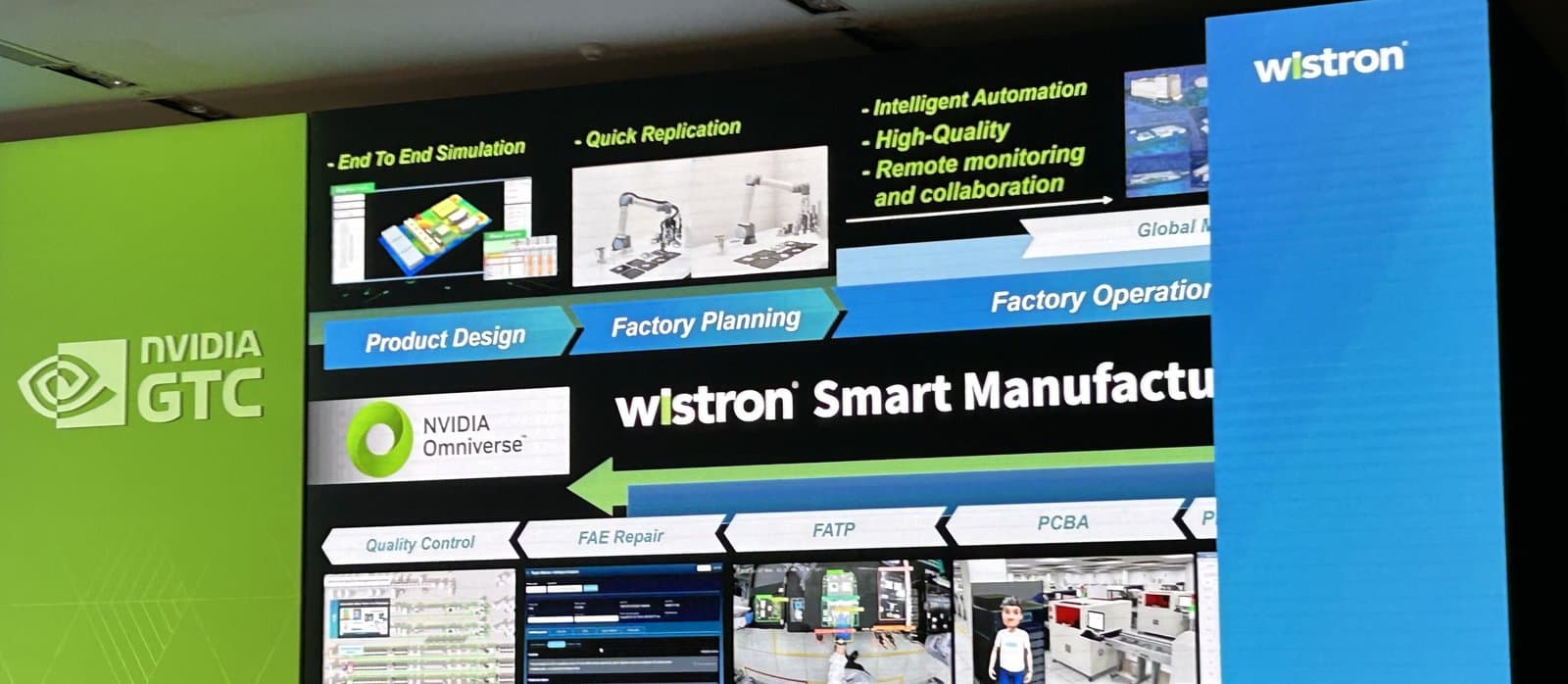
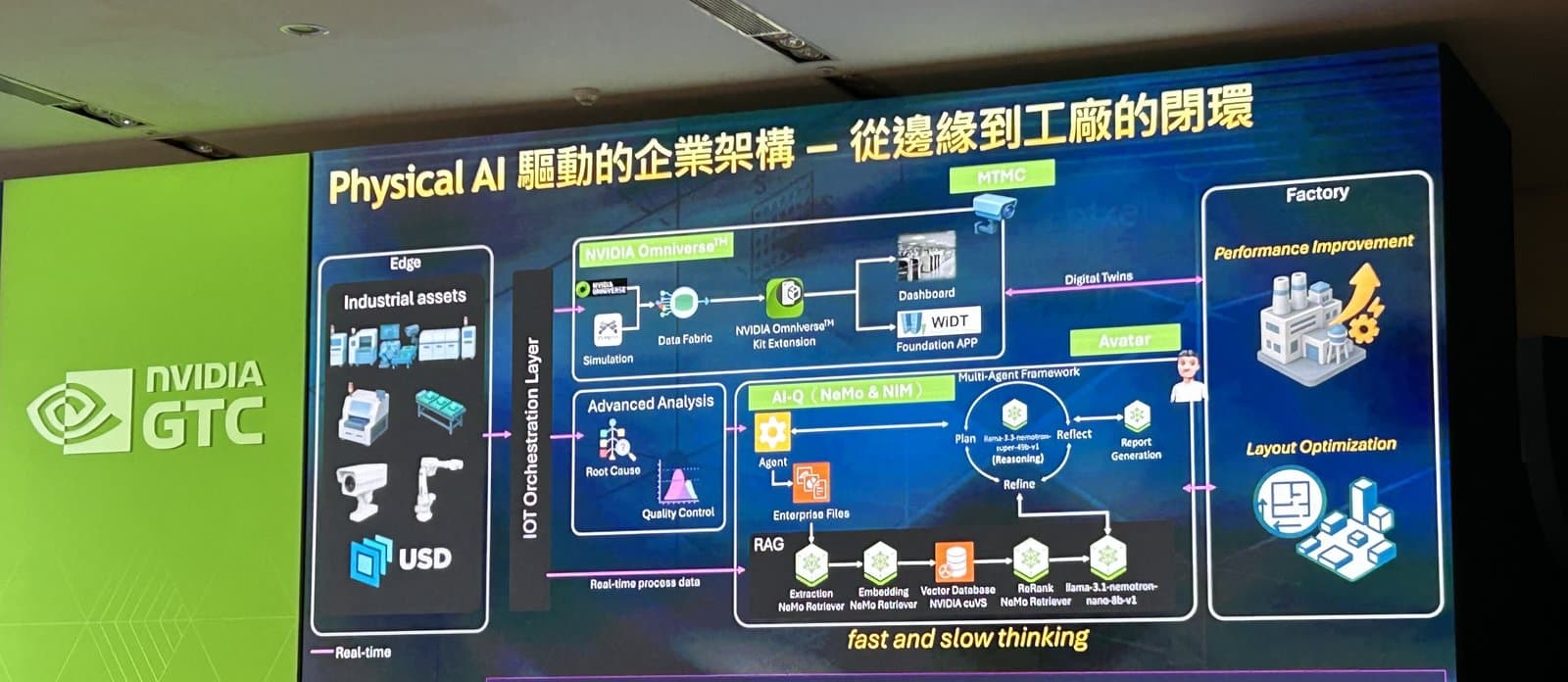
The third talk was the most inspiring to me. Wistron is not just building AI hardware. They are using AI to build it. The factory itself becomes the thing they design, test, and improve, first inside a digital twin, then on the real line.
A few ideas I keep thinking about:
- Simulate first, deploy later. They build and test the entire factory virtually in NVIDIA Omniverse before a single machine moves on the floor. Make your mistakes in software, not in steel.
- Close the loop. Data from the edge flows up, the system analyzes and decides, and the result flows back to the floor as a real improvement. Data should not just be collected. It should come back as action.
- Fast and slow thinking. Wistron built an "AI Intelligent Brain" with a fast retrieval path for simple questions and a slower multi-agent path for hard reasoning. They even captured a senior engineer's troubleshooting guide and turned it into an executable AI workflow.
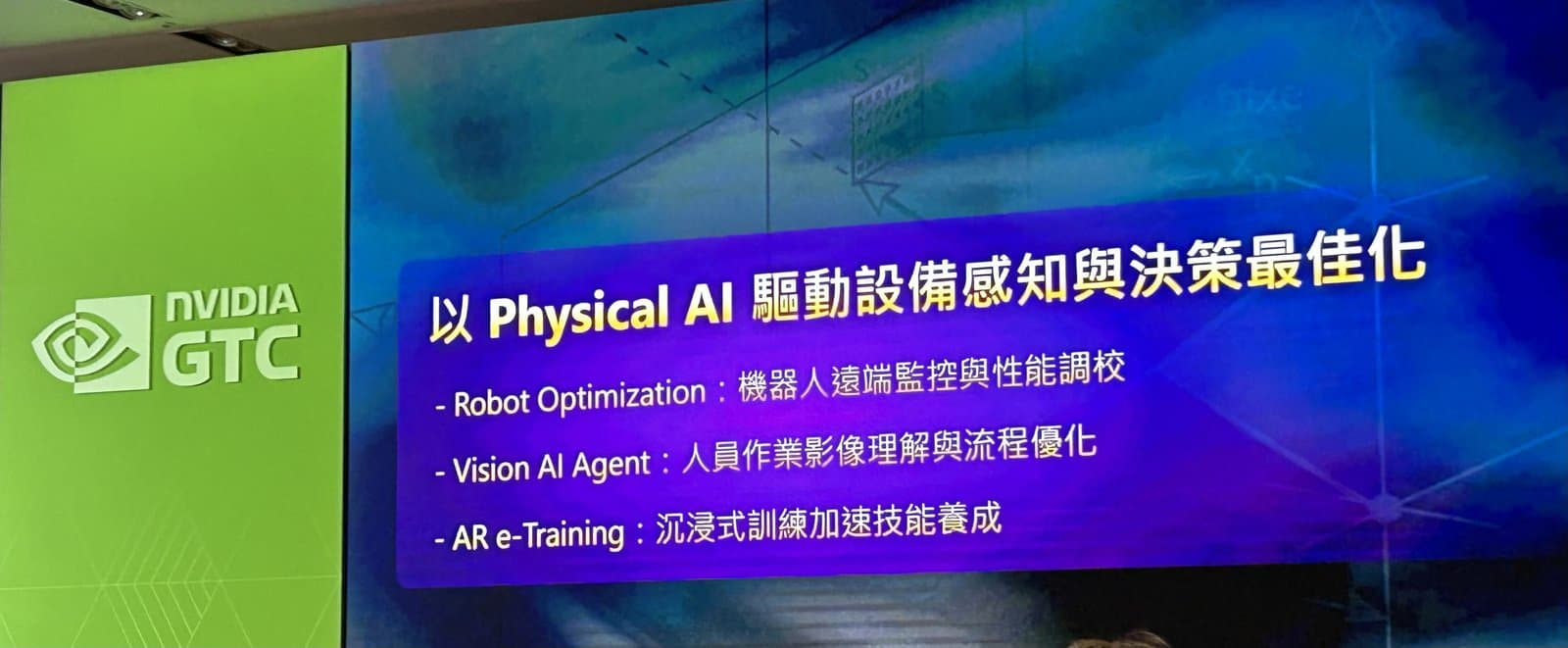
- AI at every station, not one big tool. Across planning, assembly, repair, and quality control, they put small AI agents everywhere. The value is not one smart tool. It is many small wins stacked across the whole line.
The pattern across all three
When I step back, the three talks tell one story.
AI is becoming physical and infrastructural. It needs new power. It needs new buildings. It needs to be integrated, safely, into real industries like healthcare and manufacturing. And in every case, the foundation models are becoming a commodity. The durable value is moving to those who can host, integrate, and apply.
Taiwan understood this early. They are not just buying AI. They are rebuilding their power grid, their hospitals, and their factories around it.
1 MW
per rack — NVIDIA Gen 4 target in the early 2030s
$2.15B
Taiwan's Healthy Taiwan AI healthcare program
7×
power density jump from Gen 1 to Gen 4 racks
So what does this mean for the Philippines?
This is the question I really want us to sit with. A few honest points.
1. We need to talk seriously about infrastructure readiness
Most data centers in the country today cannot host a 1 MW, liquid-cooled rack. That is not a criticism. It is just the reality of how fast the hardware is moving. The strategic question for our local cloud and data center players is simple: do we invest now in high-density, liquid-cooled capacity, or do we accept that the heaviest AI workloads will keep getting rented from abroad? There is no wrong answer, but there is a cost to not deciding.
2. The biggest opportunity for us is integration, not foundation models
We do not need to build the next frontier model. We will not win that race, and we do not have to. The Foxconn and Quanta lesson is that the money and the trust sit with whoever can put the pieces together safely for a specific industry. Philippine tech is well positioned here: in healthcare, in manufacturing, in BPO, in retail and logistics. We know our own industries and our own compliance landscape better than any outsider.
3. The Wistron pattern is repeatable, even for small companies
You do not need to be a giant manufacturer. The principles work anywhere: simulate before you deploy, close the loop between data and action, and place small AI agents at each step of a process. A BPO, a bank, a hospital, a farm cooperative. All of them can apply this.
4. Start with the bottleneck, not the fanciest model
Every real win in these talks came from a clear use case like repair, quality control, or scheduling, not from one giant AI. Pick the painful problem first. The technology is the easy part.
5. Data discipline is the real foundation
None of this works without clean, connected, real-time data. The fancy digital twin is only as good as the data feeding it. For many Philippine organizations, this is the unglamorous work that has to come first. It is also the work that pays off the most.
My closing thought
The headline from GTC Taipei is not a new chip or a new model. It is that the AI buildout has become a physical, national-scale project, and other economies in our region are already moving.
For us, the goal is not to copy Taiwan. It is to be clear-eyed about where we can genuinely play, and to start now. The race went physical. The Philippines does not need to win every part of it. We just need to choose our lane, and build.
Source
Diwa “Wawi” del Mundo
Founder & CEO, Apper Cloud Labs
Wawi holds all 14 AWS certifications alongside CISSP and CCSP — one of the most credentialed cloud architects in the Philippines. He founded Apper Cloud Labs in 2019 to make enterprise-grade cloud and AI expertise accessible to Philippine SMBs.